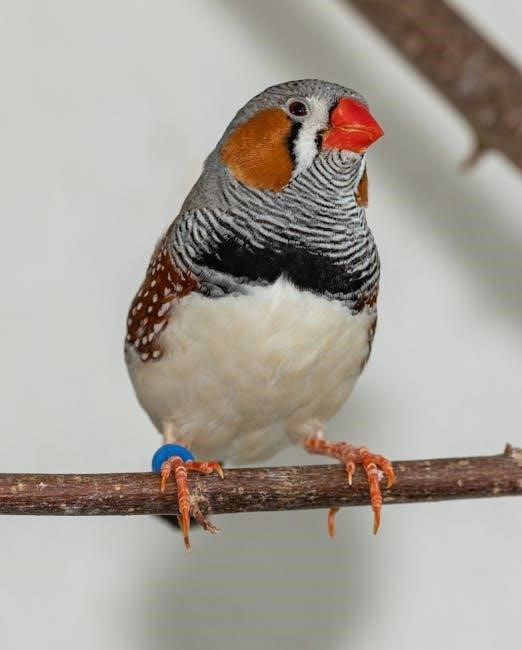
The Beak of the Finch PDF: A Comprehensive Guide
The digital PDF facilitates matching bird cards with beak descriptions‚ aiding in identification exercises and understanding evolutionary concepts‚ as seen in related studies.
Jonathan Weiner’s Pulitzer Prize-winning book‚ “The Beak of the Finch‚” masterfully chronicles decades of research conducted by Peter and Rosemary Grant on the Galapagos Islands. The readily available PDF version of this seminal work offers readers an accessible entry point into the fascinating world of evolutionary biology.
This compelling narrative centers around Darwin’s finches‚ showcasing how environmental pressures‚ specifically drought conditions‚ drive natural selection and adaptation. The PDF allows for detailed examination of the Grants’ meticulous data collection and analysis‚ focusing on beak morphology and its correlation to seed size. It’s a powerful demonstration of evolution in real-time‚ making complex scientific concepts understandable for students and enthusiasts alike. The book‚ and its PDF format‚ remains a cornerstone in understanding adaptive radiation.
About Jonathan Weiner and the Book’s Context
Jonathan Weiner‚ a science journalist‚ brought the Grants’ groundbreaking research to a wider audience with “The Beak of the Finch‚” published in 1994. His skill lies in translating complex scientific data into a compelling and accessible narrative. The PDF version preserves this clarity‚ allowing readers to delve into the intricacies of the study.
The book’s context is rooted in the legacy of Charles Darwin and his observations during the voyage of the Beagle. Weiner skillfully connects the historical context to the contemporary research‚ highlighting the ongoing nature of evolutionary discovery. The PDF facilitates easy access to this historical connection. Furthermore‚ the book’s exploration of scientific methodology‚ as presented in the PDF‚ offers valuable insights into the process of scientific inquiry itself.
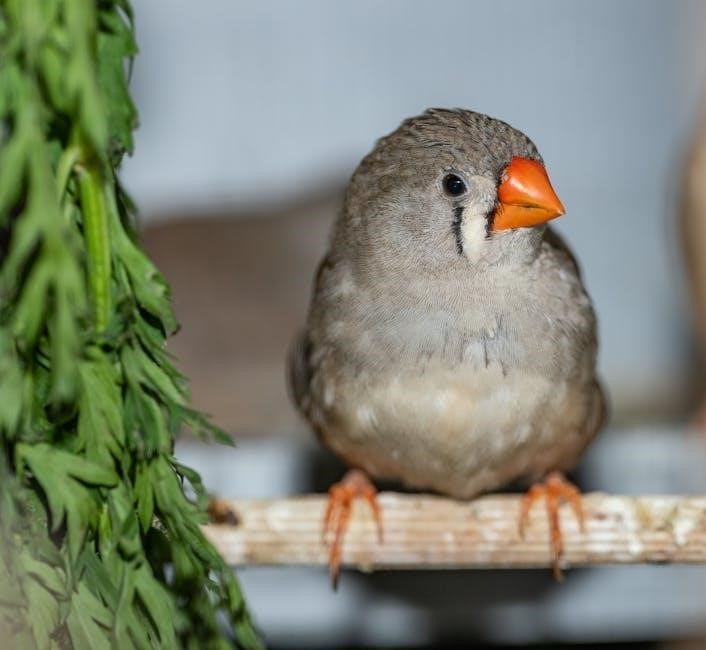
The Galapagos Islands: A Living Laboratory
The Galapagos Islands‚ a volcanic archipelago‚ provided the unique environment for Darwin’s initial observations and‚ later‚ for the Grants’ decades-long study. The isolated nature of the islands fostered the evolution of distinct species‚ including the iconic finches. The PDF version of “The Beak of the Finch” vividly portrays this isolated ecosystem.
This geographical isolation created a “living laboratory” where evolutionary processes could be observed in real-time. The PDF allows readers to virtually explore this laboratory‚ understanding how environmental pressures shaped beak morphology. The islands’ diverse habitats‚ from arid lowlands to humid highlands‚ contributed to the adaptive radiation of the finches‚ a process detailed within the PDF’s pages. Studying the PDF enhances appreciation for the islands’ crucial role in evolutionary biology.

Darwin’s Finches: The Core of the Study
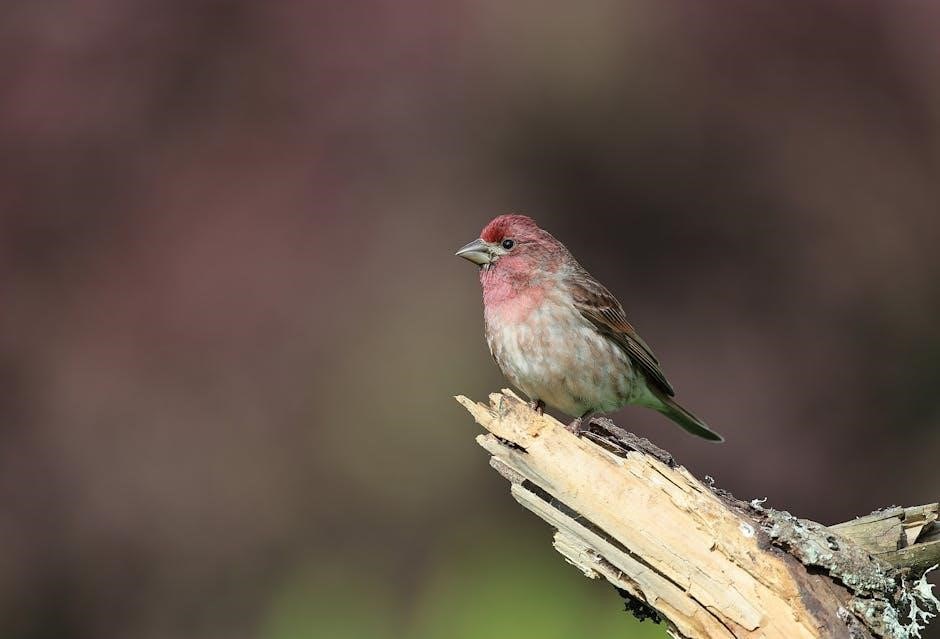
Darwin’s finches‚ central to the book and PDF‚ demonstrate adaptive radiation; their varied beaks‚ meticulously documented‚ reveal evolutionary responses to environmental changes.
Historical Context: Darwin’s Observations
Charles Darwin’s voyage on the HMS Beagle provided the foundational observations for understanding evolution‚ particularly through the diverse finch populations inhabiting the Galapagos Islands. He noted striking variations in beak morphology among these birds‚ correlating these differences with their respective food sources and island environments.
While Darwin didn’t immediately grasp the mechanisms driving these variations – the PDF resource details later research clarifying this – his meticulous documentation laid the groundwork for future investigations. The initial observations sparked questions about species origins and adaptation. The PDF‚ building upon Darwin’s work‚ showcases how these finches became a pivotal case study for natural selection.
Darwin’s initial categorization of the finches‚ though incomplete‚ highlighted a pattern of divergence. Later studies‚ detailed within the PDF‚ revealed the genetic basis for these beak variations and their responsiveness to environmental pressures‚ solidifying the finches’ role in evolutionary theory.
Peter and Rosemary Grant’s Research
Peter and Rosemary Grant’s decades-long study on Daphne Major Island revolutionized our understanding of Darwin’s finches‚ providing concrete evidence of natural selection in real-time. Their meticulous work‚ extensively documented and accessible through resources like the PDF‚ involved capturing‚ measuring‚ and tracking finch populations over generations.
The Grants demonstrated how beak size and shape shifted in response to fluctuating food availability‚ particularly during drought conditions. The PDF illustrates how smaller‚ harder seeds favored birds with larger beaks‚ leading to increased survival and reproduction rates within that trait.
Their research‚ detailed in “The Beak of the Finch‚” showcased the heritability of beak traits and the speed at which evolutionary changes can occur. The PDF serves as a valuable tool for understanding their methodology and the profound implications of their findings for evolutionary biology.
The Role of Daphne Major Island
Daphne Major Island‚ a small volcanic islet in the Galapagos archipelago‚ served as the primary field site for Peter and Rosemary Grant’s groundbreaking research on Darwin’s finches. Its isolated nature and relatively small size allowed for comprehensive monitoring of finch populations‚ making it an ideal “living laboratory.”
The island’s fluctuating environmental conditions‚ particularly the frequency of droughts‚ provided a natural experiment to observe natural selection in action. The PDF detailing the research highlights how these environmental shifts directly impacted beak size and shape within the finch populations.
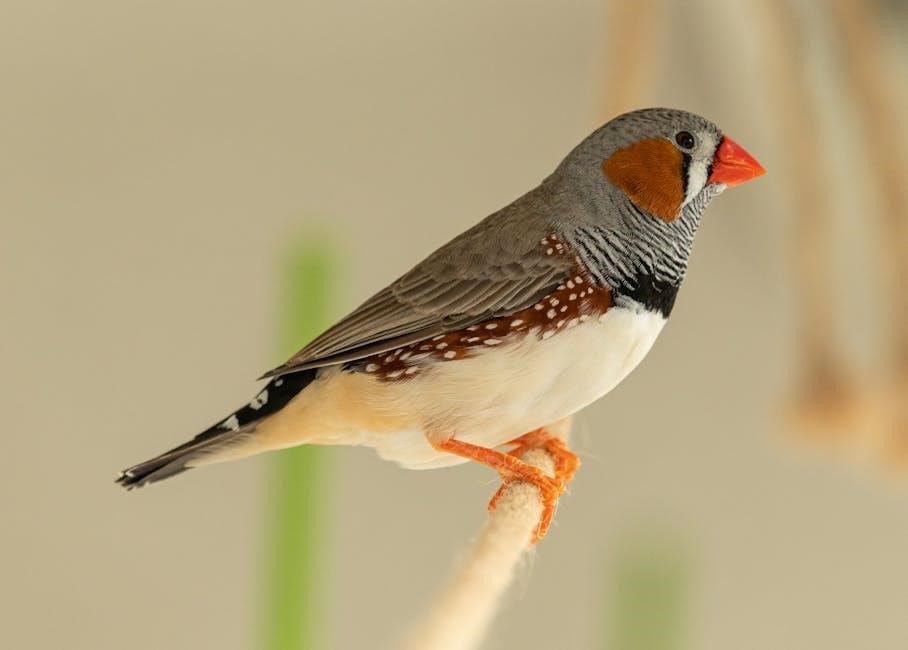
Detailed maps and population data‚ often found within the PDF resources‚ illustrate the specific locations where the Grants conducted their studies and the long-term trends observed on Daphne Major. This focused study site was crucial for their discoveries.
Beak Morphology and Adaptation
The PDF details diverse beak types and functions‚ correlating beak depth with seed size‚ and illustrating how drought conditions impact finch beak evolution.
Types of Beaks and Their Functions
The “Beak of the Finch” PDF meticulously outlines the remarkable diversity in beak morphology among Darwin’s finches‚ directly linking these variations to specialized feeding strategies. It showcases how different beak shapes – from stout‚ crushing beaks ideal for hard seeds to slender‚ probing beaks suited for insects – represent adaptive responses to available food sources.
The PDF likely illustrates examples like the ground finches with their robust beaks‚ the cactus finches possessing longer‚ decurved beaks for accessing nectar‚ and the insectivorous finches with delicate‚ pointed beaks. Understanding these functional correlations is central to grasping the principles of natural selection and adaptive radiation. The resource emphasizes that beak form isn’t random; it’s a direct consequence of evolutionary pressures.
Furthermore‚ the PDF probably details how these beak adaptations allow finches to minimize competition and exploit niche resources effectively‚ contributing to their survival and reproductive success on the Galapagos Islands.
Seed Size and Beak Depth Correlation
The “Beak of the Finch” PDF highlights a crucial relationship: a strong positive correlation between seed size and beak depth in Galapagos finches. Larger‚ harder seeds necessitate deeper‚ stronger beaks capable of cracking them open‚ while smaller seeds can be managed by finches with shallower beaks.
The PDF likely presents data illustrating how‚ during periods of abundant small seeds‚ finches with shallower beaks thrive‚ and conversely‚ when large seeds dominate‚ those with deeper beaks have a survival advantage. This dynamic demonstrates natural selection in real-time.
The resource probably details the Grants’ meticulous measurements of beak depth and seed hardness‚ showcasing how these traits co-evolve. Understanding this correlation is fundamental to comprehending how environmental changes drive evolutionary adaptation within finch populations.
The Impact of Drought on Beak Size
The “Beak of the Finch” PDF meticulously documents the dramatic effects of drought on finch beak sizes‚ particularly during the 1977 El Niño event. Severe drought conditions led to a scarcity of small‚ soft seeds‚ favoring larger‚ harder seeds that remained available.
Consequently‚ the PDF likely illustrates a significant increase in average beak depth within the finch population. Finches with naturally deeper beaks were better equipped to exploit the remaining food source‚ exhibiting higher survival and reproductive rates.
This event‚ detailed within the resource‚ provides compelling evidence of natural selection. The PDF probably showcases graphical data demonstrating the shift in beak size distribution‚ solidifying the link between environmental pressures and evolutionary change in real-time.
Evolutionary Processes Demonstrated
The PDF vividly illustrates natural selection‚ adaptive radiation‚ and heritability of traits through detailed finch beak data and analysis of population changes.
Natural Selection in Action
The “Beak of the Finch” PDF powerfully demonstrates natural selection through the Grants’ decades-long study on Daphne Major. It showcases how environmental pressures‚ specifically drought conditions‚ directly impacted finch populations.
During droughts‚ larger‚ harder seeds became prevalent. Finches with deeper‚ stronger beaks were better equipped to crack these seeds‚ granting them a survival advantage. Consequently‚ these finches reproduced more successfully‚ passing on their beak traits to subsequent generations.
The PDF’s data visually represents this shift‚ showing a measurable increase in average beak depth within the finch population following drought periods. This isn’t merely observation; the PDF facilitates understanding the statistical analysis supporting this conclusion‚ solidifying natural selection as a driving evolutionary force.
The Concept of Adaptive Radiation
The “Beak of the Finch” PDF brilliantly illustrates adaptive radiation‚ Darwin’s theory of species evolving from a common ancestor to fill different ecological niches. The Galapagos finches exemplify this process‚ diverging in beak morphology to exploit varied food sources.
The PDF details how‚ initially‚ a single finch species colonized the islands. Over time‚ isolated populations encountered different selective pressures – seed sizes‚ insect availability‚ and cactus flowers. This led to the evolution of specialized beak shapes‚ each optimized for a specific diet.
From crushing seeds to probing flowers‚ the PDF showcases the remarkable diversity arising from this adaptive process. It’s a compelling case study demonstrating how a single lineage can radiate into multiple species‚ each uniquely adapted to its environment‚ driven by natural selection.
Heritability of Beak Traits
The “Beak of the Finch” PDF emphasizes the crucial role of heritability in evolutionary change. The Grants’ decades-long research‚ detailed within the PDF‚ demonstrated that beak size and shape are significantly heritable traits in Darwin’s finches.
This means that offspring tend to resemble their parents in beak characteristics. The PDF showcases data illustrating how beak depth and width are passed down through generations‚ providing the raw material for natural selection to act upon.
Crucially‚ the PDF highlights that beak traits aren’t solely determined by genetics; environmental factors also play a role. However‚ the consistent inheritance patterns observed by the Grants were fundamental to understanding the rapid evolutionary responses observed during drought conditions.

Analyzing Data from “The Beak of the Finch”
The PDF supports analyzing beak dimensions and changes statistically‚ revealing long-term population trends and illustrating evolutionary processes in Darwin’s finches.
Measuring Beak Dimensions
Utilizing the “Beak of the Finch” PDF‚ precise beak measurements are crucial for understanding adaptation. Researchers meticulously record parameters like beak depth and length‚ employing tools for accurate data collection. This involves capturing dimensions from numerous finches across generations‚ establishing a comprehensive dataset.
The PDF often includes illustrative diagrams detailing measurement techniques‚ ensuring consistency among observers. These measurements aren’t simply numbers; they represent phenotypic variations directly linked to environmental pressures. Analyzing these dimensions allows scientists to quantify the impact of factors like seed size availability on beak morphology.
Furthermore‚ the PDF can guide students in replicating these measurements‚ fostering a hands-on understanding of data acquisition in evolutionary biology. Accurate measurement is the foundation for statistical analysis and drawing meaningful conclusions about natural selection.

Statistical Analysis of Beak Changes
The “Beak of the Finch” PDF supports understanding how researchers analyze beak dimension data. Statistical methods‚ like regression analysis‚ reveal correlations between beak size and seed availability. Examining changes over time requires tracking average beak measurements across generations‚ identifying trends and significant shifts.
The PDF can illustrate how scientists calculate heritability – the proportion of beak variation attributable to genetic factors. Statistical tests determine if observed changes are due to random chance or natural selection. Analyzing data distributions helps visualize the range of beak sizes within populations.
Furthermore‚ the PDF can present examples of statistical outputs‚ enabling students to interpret results and draw conclusions about evolutionary processes. This analytical approach is vital for validating hypotheses and building a robust understanding of adaptation.
Long-Term Trends in Finch Populations
The “Beak of the Finch” PDF showcases how prolonged observation reveals population dynamics. It demonstrates shifts in allele frequencies linked to beak traits over decades‚ illustrating evolutionary responses to environmental pressures. The PDF can depict graphs charting population sizes alongside changes in average beak depth or length.
Analyzing these trends reveals whether certain beak types become more or less common following droughts or periods of abundant rainfall. It highlights the cyclical nature of selection‚ where favored traits fluctuate with environmental conditions. The PDF can illustrate how immigration and emigration impact genetic diversity.
Ultimately‚ the PDF emphasizes that evolution isn’t a one-time event‚ but a continuous process shaped by long-term ecological interactions and genetic variation within finch populations.

Educational Applications of the Book & PDF
The PDF supports bird identification‚ matching beaks to food sources‚ and clarifies evolutionary principles through a compelling case study for students and educators.
Using the PDF for Bird Identification Exercises
The “Beak of the Finch” PDF serves as an exceptional tool for practical bird identification exercises‚ particularly focusing on Darwin’s finches. Students can utilize the detailed illustrations and descriptions within the PDF to accurately match bird cards with corresponding beak morphology characteristics.
This hands-on approach reinforces understanding of how beak shapes are directly linked to dietary habits. The PDF’s content allows for creating customized quizzes and activities‚ challenging students to identify finch species based solely on beak structure. Furthermore‚ it encourages comparative analysis‚ prompting learners to discern subtle differences in beak forms and correlate them with specific food sources.
By actively engaging with the PDF’s resources‚ students develop crucial observational skills and a deeper appreciation for the intricate relationship between anatomy and adaptation in the natural world. It’s a dynamic learning experience beyond traditional textbook study.
Matching Beaks to Food Sources
The “Beak of the Finch” PDF excels at illustrating the direct correlation between beak morphology and dietary specialization in Darwin’s finches. Exercises within‚ or developed using the PDF‚ challenge learners to match specific beak types – like those suited for cracking seeds or probing for insects – to their corresponding food sources.
This activity reinforces the core principle of adaptive radiation‚ demonstrating how natural selection favors traits that enhance foraging efficiency. Students can analyze how variations in beak depth and size enable finches to exploit different ecological niches. The PDF’s visual aids are crucial for understanding these relationships.
By actively connecting beak structure to food availability‚ students grasp the power of natural selection in shaping evolutionary pathways‚ solidifying their comprehension of ecological adaptation.
Understanding Evolutionary Concepts Through Case Study
The “Beak of the Finch” PDF provides a compelling real-world case study for grasping complex evolutionary concepts. It vividly demonstrates natural selection‚ adaptive radiation‚ and heritability‚ moving beyond abstract definitions. Students witness these processes unfolding in a dynamic island environment.
The PDF’s detailed account of Peter and Rosemary Grant’s research on Daphne Major Island allows learners to analyze long-term data on finch populations. This fosters critical thinking about how environmental pressures‚ like drought‚ drive evolutionary change.
By examining beak size variations and their impact on survival‚ students internalize the mechanisms of evolution. The PDF transforms theoretical knowledge into concrete understanding‚ making evolutionary biology accessible and engaging.
Resources and Further Exploration
Explore online resources‚ scientific papers‚ and articles to deepen your understanding of Darwin’s finches‚ supplementing the “Beak of the Finch” PDF study.
Online Resources Related to Darwin’s Finches
Numerous online platforms offer supplementary materials for studying Darwin’s finches‚ enhancing comprehension of the concepts detailed in “The Beak of the Finch” PDF. The Galapagos Conservancy website (https://www.galapagos.org/) provides extensive information about the islands’ unique biodiversity and ongoing conservation efforts.
Additionally‚ the National Geographic website (https://www.nationalgeographic.com/) features articles and videos showcasing the finches and the research conducted by the Grants. Educational institutions often host digital resources‚ including interactive simulations and virtual field trips to the Galapagos. Searching academic databases like JSTOR or Google Scholar reveals peer-reviewed articles expanding on the evolutionary principles demonstrated by these remarkable birds. These resources collectively offer a richer‚ more dynamic learning experience beyond the PDF itself.
Related Scientific Papers and Articles
Expanding beyond “The Beak of the Finch” PDF‚ numerous scientific publications delve deeper into the evolutionary dynamics of Darwin’s finches. Research by Peter and Rosemary Grant‚ extensively documented in journals like Evolution and The American Naturalist‚ provides detailed analyses of beak morphology and its correlation with environmental factors.
Articles exploring adaptive radiation and natural selection in island populations offer crucial context. Investigations into the genetic basis of beak traits‚ utilizing modern genomic techniques‚ further illuminate the mechanisms driving evolution. Accessing these papers through databases like PubMed (https://pubmed.ncbi.nlm.nih.gov/) and Web of Science provides a comprehensive understanding of the ongoing research surrounding these iconic birds‚ complementing the insights offered by Weiner’s book and its PDF version.
The PDF as a Supplement to Biological Studies
“The Beak of the Finch” PDF serves as an invaluable supplementary resource for biological studies‚ particularly in evolutionary biology‚ ecology‚ and genetics. It provides a real-world case study illustrating core principles‚ enhancing comprehension beyond textbook theory.
The PDF’s content supports student exercises focused on data analysis‚ adaptation‚ and natural selection. It complements laboratory work involving bird identification and morphological measurements. Furthermore‚ the detailed observations documented within the PDF offer a foundation for independent research projects and critical thinking about evolutionary processes. Utilizing the PDF alongside scientific papers fosters a deeper‚ more nuanced understanding of Darwin’s finches and their significance in evolutionary research.